SEO
In the hyper-accelerated landscape of 2026, Technical SEO is no longer a "nice-to-have" checklist: it is the survival kit for your digital presence. We are currently in a high-stakes race where the finish line isn't just a Google ranking; it’s being the primary source cited by AI search agents and LLMs.
If your website’s foundation is cracked, you aren't just losing traffic; you are becoming invisible to the very systems that govern modern discovery. At Nextus Education, we see entrepreneurs and startups making the same "legacy" errors every day. These mistakes act as a friction barrier, slowing down your Enrollment Velocity and leaking authority into the void.
Stop treating your technical infrastructure like a static brochure. It is the Engine of your business, and without the right tuning, your marketing efforts are just expensive fuel poured onto a cold fire.
Technical SEO is also where most businesses quietly lose the war before content marketing even begins. They publish blog posts. They launch landing pages. They invest in branding. Then they wonder why impressions stay flat, why key pages don’t index, or why competitors with weaker offers seem to outrank them. The reason is simple: search visibility is built on infrastructure before it is amplified by content.
That matters even more now because search is no longer just ten blue links. AI Overviews, answer engines, and citation-based discovery systems are compressing the path between question and recommendation. If your site is hard to crawl, slow to render, thin in structure, or vague in metadata, you are not just harder to rank. You are harder to trust at machine speed.
So let’s get practical. Below are the seven technical SEO mistakes we see most often, what they actually cost you, and how to fix them before they become expensive growth bottlenecks.
1. The "Information Density" Trap: Ignoring AI Crawlability
Many founders believe that as long as their site looks "stunning" on Framer or Webflow, search engines will figure it out. This is a fatal assumption. In 2026, Information Density is the metric that matters. If your site is a maze of heavy animations and shallow text, AI crawlers will bounce before they can extract your value proposition.
The Mistake: Prioritizing aesthetic "wow-factor" over crawlable clarity. If a bot can't parse your core offer in under 200ms, you don’t exist.
This issue usually shows up when a homepage looks beautiful to humans but tells almost nothing to machines. Headlines are vague. Key service details are hidden behind tabs, sliders, or interactions. Important proof points live in carousels that bots may not interpret well. In other words, your site may feel premium while still being structurally empty.
The Fix:
Audit your site using the Nextus AI-SEO Workflow.
Ensure your "What," "How," and "Why" are in plain HTML, not buried inside complex JS-triggered components.
Use concise, factual sections that AI agents can summarize easily.
Add direct headings that explain your offer in business language, not just brand language.
Make sure critical copy appears high on the page and not only after long visual sections.
A strong test is simple: if someone lands on the page and scrolls for five seconds, can they clearly identify who you help, what outcome you produce, and what action they should take next? If not, your information density is weak, and that weakness becomes a ranking problem fast.
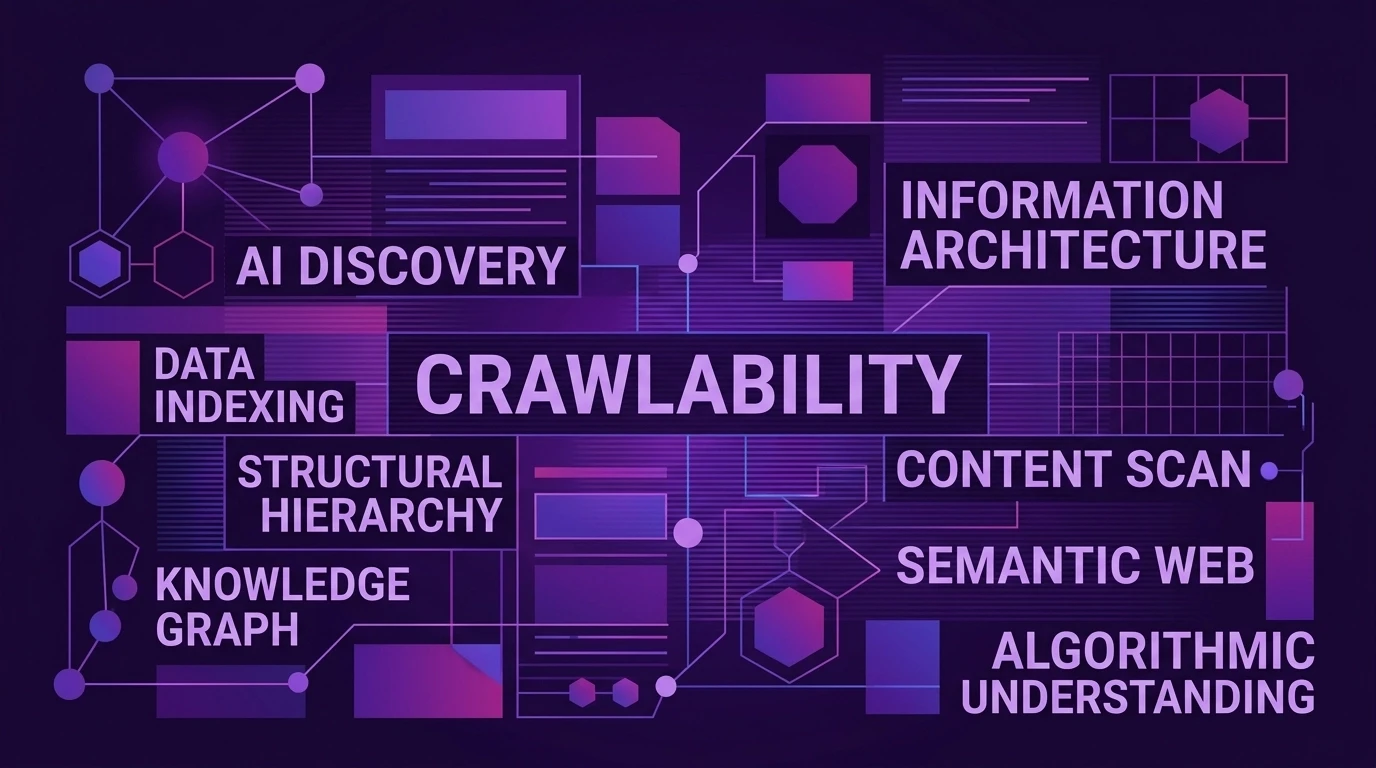
> Strategic Anchor: AI search agents prefer content that is "self-contained." Each section of your page should answer a specific query without requiring the bot to "guess" the context from other pages.
2. Orphaned Architecture: The "Lost Map" Scenario
You’ve spent weeks building a high-converting landing page, but it’s sitting at the root level with zero internal links pointing to it. This is an Orphaned Page. To a crawler, an orphaned page is a dead end.
The Mistake: Building pages in silos. If your main navigation and blog posts don't point to your revenue-driving pages, you are effectively hiding your business from the world.
This is one of the most common silent failures in small business SEO. Teams create pages for services, lead magnets, webinars, or new product categories, but they never connect them into the larger site ecosystem. The page technically exists, but it has no authority pathways feeding into it. That means search engines treat it as less important, and users are less likely to discover it naturally.
Bad architecture also creates confusion about page priority. If five blog posts mention "SEO training" but none of them link to your SEO course page, you are sending mixed signals. You are generating topical relevance without channeling it into the page that actually drives revenue.
The Fix:
Implement a Pillar-Cluster model. Every service page must be supported by 3–5 blog posts that link back to it.
Check your internal link depth; no critical page should be more than two clicks away from the homepage.
Review our guide on Mastering AEO to see how internal hierarchy drives AI citations.
Add contextual internal links from high-authority pages, not just footer links.
Use descriptive anchor text so crawlers understand the relationship between pages.
Review your XML sitemap and navigation structure to confirm that important URLs are consistently discoverable.
Strategic Anchor: Internal linking is not housekeeping. It is authority routing. If your architecture doesn’t clearly tell Google and AI systems which pages matter most, they will make that decision for you, and they usually get it wrong.
3. Zero Semantic Schema: The "Language Gap"
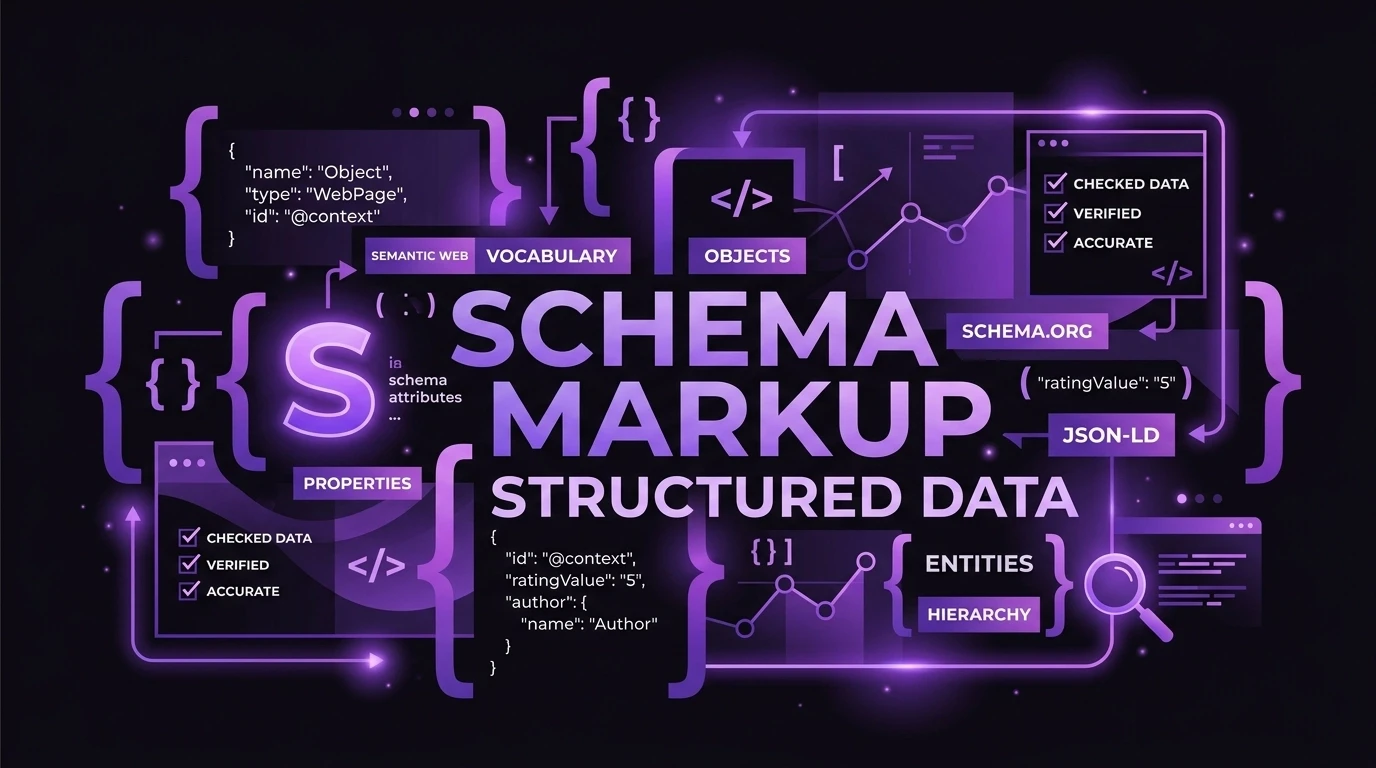
Schema markup (JSON-LD) is the Signature Handshake between your website and a search engine. Most "standard" SEO advice tells you to use meta tags. We tell you that’s the bare minimum. In 2026, if you aren't using deep semantic schema, you are speaking a language the robots have stopped listening to.
The Mistake: Using generic "Article" schema for everything or, worse, having no schema at all.
A lot of business owners assume schema is optional because they don’t see it on the page. That’s exactly why it gets neglected. But schema is one of the clearest ways to reduce ambiguity. It helps machines understand whether a page is about a course, a service, an organization, a FAQ, a product, or a person. And in an environment driven by extraction and summarization, reducing ambiguity is a power move.
The bigger issue is mismatch. Many sites use schema, but they use the wrong type or leave critical properties blank. That creates partial signals instead of strong ones. A page selling a course should not only be marked as a generic web page. It should reflect the offer, brand, topic, and user action in a structured format.
The Fix:
Map your CMS fields directly to JSON-LD variables.
Implement
Organization,Service,Product, andFAQschema on every relevant page.Golden Nugget: Don’t just mark up what the page is; mark up what it does. Use
potentialActionproperties to tell AI agents how users can interact with your brand.Validate your schema with testing tools after every major template update.
Keep schema aligned with on-page content so your structured data doesn’t overpromise or conflict.
Treat schema like a reusable system, not a one-time technical add-on.
When done right, schema becomes a machine-readable layer of trust. It sharpens your brand identity, reinforces relevance, and increases the odds that search systems classify your pages correctly the first time.
4. Script Bloat & Performance Debt: The "Friction Barrier"
Visual builders like Webflow and Framer are powerful, but they often come with "Performance Debt." Every unoptimized marketing pixel, every heavy third-party script, and every 4MB hero video is a tax on your Crawl Budget.
The Mistake: Letting your "LCP" (Largest Contentful Paint) skyrocket because you wanted a 4K background video that no one waits to see.
Most performance problems are not caused by one catastrophic asset. They come from accumulation. A chat widget here. A heatmap there. Three ad scripts. Two retargeting tools. Oversized PNGs. Auto-playing media. Before long, your site is carrying dead weight on every page load.
This is where many brands confuse design ambition with conversion strategy. A flashy site that loads slowly is not sophisticated. It is expensive friction. Slow rendering hurts engagement, weakens crawl efficiency, and often reduces the amount of content search engines process during a visit.
The Fix:
Switch to hosted video platforms with lazy-loading.
Audit your site scripts. If a tracking pixel isn't providing actionable data today, kill it.
Optimize your images for the exact container size: never upload a 4000px image for a 400px card.
Compress above-the-fold assets aggressively without sacrificing visual clarity.
Defer non-essential scripts and remove duplicate tracking tools.
Review mobile performance separately because that’s where hidden performance debt usually shows up first.
A practical mindset helps here: every asset on the page should justify its existence. If it doesn’t improve clarity, trust, or conversion, it is probably stealing speed from the pages that matter most.
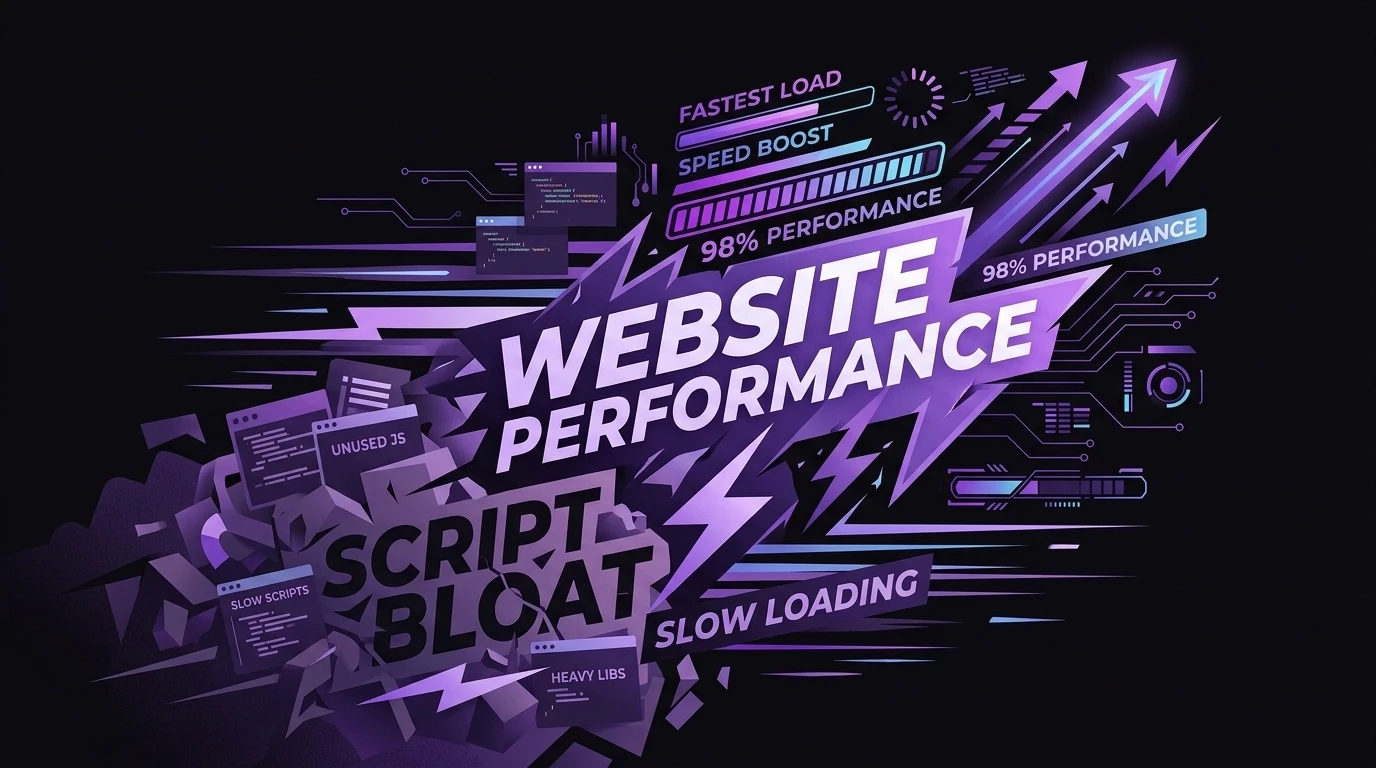
> Expert Perspective: High performance isn't just for user experience. AI models use "latency-aware" crawling. If your site is slow, you are deprioritized in the real-time index.
5. Broken Redirect Logic: The "Equity Leak"
Redesigning your site is a major milestone, but if you don't map your old URLs to your new ones, you are committing digital suicide. We see 40% traffic drops post-launch simply because 301 redirects were treated as an afterthought.
The Mistake: Changing your URL structure (e.g., from /blog/post to /articles/post) without a redirect map. This discards years of built-up authority.
Redirects are where careless launches go to die. Teams get excited about a new design, cleaner URL structure, or a CMS migration, but they forget that search engines have memory. Old URLs may have backlinks, rankings, and historical trust attached to them. When those URLs break, the authority doesn’t magically transfer.
The damage is bigger than traffic loss. Broken redirect logic can create index bloat, poor user experience, and diluted ranking signals across duplicate or obsolete paths. It also wastes time because recovery often takes weeks or months after the mistake has already gone live.
The Fix:
Before launching any update, crawl your existing site to get a master list of all URLs.
Create a 1:1 mapping for every single page.
Avoid Redirect Chains (A → B → C). Always link A directly to C.
Prioritize pages with backlinks, traffic, and conversions first if you need a phased approach.
Test redirects in staging before launch and again after deployment.
Update internal links to point to final URLs so redirects are used as backup, not as permanent navigation helpers.
Expert Perspective: A redirect map is not technical cleanup. It is revenue protection. If your site has earned authority over time, sloppy migration work can erase it in a weekend.
6. The "Ghost Protocol": Ignoring AI-Specific Control Files
By 2026, the robots.txt file is no longer enough. You need to tell AI agents exactly how to digest your content using modern standards like llms.txt.
The Mistake: Not providing a clear path for LLMs to extract your "Source of Truth."
This is where forward-thinking brands are beginning to separate themselves from legacy operators. Traditional search indexing still matters, but AI systems increasingly look for compressed, high-confidence signals. If you don’t provide them, they are forced to infer your business from scattered pages, inconsistent headings, and fragmented metadata.
That is risky. When machines have to guess, they often summarize poorly. They may misunderstand your services, skip your priority pages, or pull context from weak content that doesn’t represent your best offer. A properly maintained AI-facing control layer helps reduce that risk.
The Fix:
Create an
llms.txtfile in your root directory.Clearly define what your site provides, your core services, and which pages are the most authoritative.
This file acts as a fast-track for AI agents to understand your Digital Campus without crawling 500 pages of fluff.
Keep your key brand, offer, and topical authority pages easy to locate from both navigation and structured files.
Review these files whenever your site structure or service lineup changes.
Think of AI control files as summarization infrastructure, not just crawl instructions.
You do not control how every model will interpret your brand. But you can drastically improve the quality of that interpretation by making your most important signals explicit instead of implied.
7. Misconfigured Dynamic Meta Templates: The "Identity Crisis"
If you are using a CMS, you might be accidentally publishing hundreds of pages with the same title tag. This "Identity Crisis" tells Google that your content is duplicate and low-value.
The Mistake: Leaving your CMS SEO settings as "Blog - Nextus Education" for every single post.
Meta templates are one of the easiest technical wins, yet they are constantly mishandled. Businesses launch a CMS, connect a collection, and assume the SEO fields are working correctly. Then months later, they discover dozens or hundreds of pages with repetitive title tags, weak descriptions, or missing social metadata.
That creates two problems. First, search engines struggle to differentiate your pages. Second, users are less likely to click when every result looks generic. In a crowded SERP, weak metadata kills click-through rate before your content even has a chance to compete.
The Fix:
Use dynamic variables:
{{Post Title}} | {{Category}} | Nextus Education.Ensure every meta description is unique and query-aware.
If you're unsure how to set this up in Framer or Webflow, our SEO Crash Course covers the exact technical configurations we use for our high-end agency clients.
Build fallback logic so empty CMS fields do not produce broken or duplicate outputs.
Review title length and description length for readability, not just keyword inclusion.
Align page titles with actual search intent so metadata reflects the problem the user is trying to solve.
Golden Nugget: Your title tag is not just an SEO field. It is your first sales line in search. If it lacks specificity, urgency, or relevance, you are leaking clicks before the race even starts.
The Nextus Edge: Our Take
At Nextus Education, we don't believe in "standard" SEO. Standard is for those who are content with the leftovers of the market. To lead, you must treat your technical foundation as a competitive advantage.
The transition from traditional search to AI-driven discovery is not a suggestion; it is a mandate. Those who fix these seven mistakes today will own the citations of tomorrow. Those who ignore them will be relegated to the "relic" index of the web.
Here’s the bottom line: content strategy without technical execution is a stalled engine. You can publish more articles, shoot more videos, and push more offers, but if your site is difficult to crawl, understand, and trust, your growth ceiling stays low. The brands winning in 2026 are not just louder. They are technically cleaner, structurally sharper, and easier for both humans and machines to process.
That is the real competitive edge. Not hacks. Not gimmicks. Not bloated checklists copied from legacy SEO blogs. Just disciplined infrastructure that turns every page into an asset instead of a liability.
Are you ready to take control of your technical destiny, or are you going to let your competitors outpace you in the AI race?
Enroll in the Ultimate Web Design & SEO Class and build a site that doesn't just look good: it dominates.
Related Blogs